
What are the objectives of an audit?
Auditing Objectives
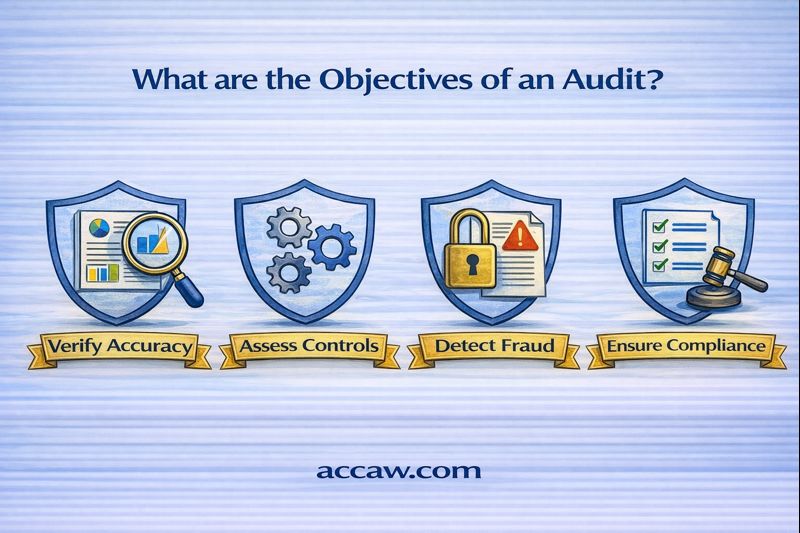
What are the objectives of an audit?
Summary: The primary objective of an audit of financial statements is for the auditor to express an opinion on whether the financial statements are prepared, in all material respects, in accordance with an applicable financial reporting framework (e.g., IFRS). Underpinning this are specific objectives to obtain reasonable assurance, detect material misstatements, evaluate accounting policies, and form an opinion based on audit evidence.
The Auditor's Mandate: To Provide Assurance
An audit is not a guarantee of perfection or a 100% check of every transaction. It is a systematic process designed to provide reasonable assurance that the financial statements, taken as a whole, are free from material misstatement, whether due to fraud or error.
1. The Primary Objective: Expression of Opinion
"The objective of an audit of financial statements is to enable the auditor to express an opinion whether the financial statements are prepared, in all material respects, in accordance with an applicable financial reporting framework."
– International Standards on Auditing (ISA) 200
This opinion is communicated through the Auditor's Report. The key outcomes are the four types of audit opinions: Unmodified (Clean), Qualified, Adverse, or Disclaimer of Opinion.
2. Specific Objectives Derived from the Primary Objective
To achieve the primary objective, the auditor aims to meet the following specific objectives during the audit:
A. To Obtain Reasonable Assurance
The auditor plans and performs the audit to obtain reasonable assurance (a high, but not absolute, level of assurance) that the financial statements are free from material misstatement.
- Materiality: Focus is on misstatements that could influence the economic decisions of users.
- Not Absolute Assurance: An audit cannot guarantee detection of all fraud or error due to inherent limitations (e.g., use of judgment, sampling, potential for collusion).
B. To Identify and Assess Risks of Material Misstatement
Through understanding the entity and its environment (including internal control), the auditor identifies risks of material misstatement, whether due to fraud or error, and designs audit procedures responsive to those risks.
C. To Obtain Sufficient Appropriate Audit Evidence
The auditor must gather enough quality evidence (through inspection, observation, inquiry, confirmation, recalculation, etc.) to support the audit opinion. This is the core of audit fieldwork.
D. To Evaluate the Appropriateness of Accounting Policies and Estimates
The auditor evaluates whether management's accounting policies are appropriate and consistently applied, and whether accounting estimates (e.g., bad debt provision, asset useful life) are reasonable.
E. To Evaluate the Overall Presentation of the Financial Statements
The auditor assesses whether the financial statements, including the related notes, present the information in a manner that achieves fair presentation.
F. To Form an Opinion and Report
Based on the evidence obtained, the auditor forms an opinion and clearly expresses it in a written report.
3. Objectives Related to Fraud and Law/Regulations
- Regarding Fraud: The objectives are to obtain reasonable assurance that the financial statements are free from material misstatement due to fraud, and to exercise professional skepticism. However, the primary responsibility for fraud prevention and detection lies with management.
- Regarding Laws/Regulations: The auditor should obtain reasonable assurance that the financial statements are free from material misstatement resulting from non-compliance with laws/regulations that have a direct effect on the financial statements.
4. The "Why": The Purpose Behind the Objectives
Ultimately, the audit objectives serve a broader purpose:
- Enhance Credibility: To lend credibility to the financial statements, increasing user confidence.
- Reduce Information Risk: To reduce the risk for users that the financial information they rely on is materially misstated.
- Promote Good Governance: The audit process itself can deter error and fraud and encourage robust financial reporting systems.
- Fulfill a Legal/Regulatory Requirement: For public companies and many other entities, an audit is a statutory requirement.
5. Conclusion: The Bedrock of Trust
The clearly defined objectives of an audit ensure that the engagement has a focused purpose and a measurable outcome. By achieving these objectives, the independent auditor plays a critical role in maintaining trust and efficiency in capital markets and the broader economy. The audit opinion is a valuable signal that the financial statements can be relied upon for informed decision-making.